Thursday, 14 March 2019

5 reasons why online home booking is here to stay


mchithane.org


March 2019

We look at how the availability of information online, from developers, as well as through various government policies aimed at boosting transparency, has resulted in a growing marketplace for real estate on the internet and what this means for property seekers.

In today’s digital world, online buying has become a norm. The online marketplace is so vast that there is hardly anything left out of its ambit. From a pack of noodles, or clothing to even jewellery, almost anything can be bought through online marketplaces.

With easy access to mobile data on smartphones, combined with platforms for secure online transaction, consumers have been exposed to a new channel of buying at the convenience of a click of a button. In the case of the real estate industry, consumers are predominantly more accustomed to the old practices of word-of-mouth or visiting the actual site, before making a buying decision. However, this is also slowly changing. With various benefits offered by the online medium for home booking, there is a deviation from the old pattern and a new trend can be seen, where online bookings and payments have risen in numbers.


Property Investment In Thane
Credits : freepik.com

1. Government policies like RERA give a boost to due diligence


With the government enacting consumer-friendly policies, such as the Real Estate (Regulation and Development) Act (RERA), it is mandatory for every developer to register their housing project with the authorities and provide certain specific details, for the benefit of home buyers. The consumer also has an option to check the credentials, reputation and the delivery track record of the builder, by researching online, before investing their hard-earned money in a project.

2. 24×7 availability of online bookings eliminate barriers of distance and time


The biggest advantage of online bookings, is the fact that it is available to the consumer 24×7. All one needs, is an internet connection, to book a dream home. The proliferation of mobile devices with strong data connectivity across the country, has become a boon for consumers to make online purchases. This eliminates the need to visit a particular premises, to make payments. One can book a home by logging in and making the payment online.

3. Developers turn to technology to project transparency and woo customers


In a bid to project themselves as transparent to their consumers, developers are now offering the exact floor plans or specifications of homes online. Certain developers have even gone ahead and leveraged technology, to provide a 360-degree overview of residential projects and are also using virtual reality walkthroughs and interactive online chat desks, which provide consumers with ample information.

4. Online availability of sale agreements and home loan documentation, a boon for buyers


For consumers, especially first-time home buyers, heaps of paperwork involved in buying a home, can be daunting. Confusion, over the various types of documentation required and whether one has the completed the required paperwork, can derail the overall home buying experience. However, with much of this information now available online, this whole complicated process is made simple. This means that customers can conveniently pay the booking amount online and complete the other formalities later.

5. Attractive rates on online pre-booking of properties


The developers usually look to generate maximum sales for their housing project initially and resort to special offers, such as lower interest rates, discounts, freebies, etc., on pre-booking of properties. In such a scenario, pre-booking a home can be one of the smartest and affordable ways of owning a home. To facilitate this, developers offer the option to home buyers to book their home, by paying an initial price online and paying the rest through installments.


To Know More about Property Investment In Thane Visit Real Estate Thane CREDAI MCHI Thane Unit


Source: housing.com


Wednesday, 6 March 2019

Tips For Office Designing To Improve Employee Productivity


March 2019

The businesses have evolved over the years and so have the amenities and perquisites offered by offices to their employees. Offices are no longer just about desks and chairs. They have to offer so much more to the employees in modern times. Now-a-days offices have to keep several things in mind from design to lighting so as to make employees satisfied and cheerful. Employers are realizing that they have do create environment for employees to work and even a chair or the colour of the carpet can impact the productivity and performance of the employees. In office where due care is given for designing and comfort of the employees, they contribute more for the success of the company, studies have shown. The attrition rate is lower in offices where there are proper ergonomics, convenience and privacy. The cost of acquiring new employees in such offices is lower since the existing set of employees feel happy and satisfied which means the attrition is lower.


Property Investment In Thane
Credits : freepik.com

We take a look at some of the important aspects that impact the productivity and satisfaction of employees in the modern era:


1. Layout:

The layout of the office is crucial from the point of view of communication between employees. All care must be taken to give ample opportunity to employees to communicate with each other effectively as often as they like. Now a days, teams need to work together to achieve results more than ever before and they sometimes need a breakout spaces or bigger room like a conference room to communicate the team goal and discuss any problems that may be arising for a particular team member. The conference room has to be equipped with modern projectors and other tools for the communication among the team members to be effective.

Closed cubicles may not be suitable for all the employees as it may lead to isolation and efforts should be made to have more of open and collaborative spaces. In certain cases where the nature of work so demands, making closed and private cubicles should also be provided.

Modern offices have to lay emphasis on cognitive and physical aspects of the workforce. Ergonomics play a vital role in the productivity of employees and right kind of furniture have to be provided for efficiency and comfort of the employees otherwise they can have frequent backaches and pain, resulting in greater absenteeism. The corridors have to wide to allow easy movement of the employees. Congested or Stuffy offices will take the productivity of the employees down.

2. Lighting:

The righting kind and amount of lighting in office can reduce fatigue, increase efficiency and output, improve the cheerfulness and morale of the employees. It also ensures overall higher quality of work among the employees. Extreme care should be given to the lighting aspect as lighting also play a crucial role in supporting the moods of the employees. Lighting should be used in way that it lifts the mood and productivity of the employees but at the same time environment safeguards also have to be kept in mind. The right balance of heat and light has to be maintained, especially keeping the weather outside in mind. Efforts to reduce visual glare must also be made. The intensity of light, including sunlight, can be different in different parts or corners of the office depending on the nature of the work of specific sets of employees. A lot of light can also result in eye fatigue and other associated disorders so a healthy balance needs to be found out depending upon the location of the office.

3. Interiors:

The interiors have a major role to play in the productivity of the employees. While certain colour themes can enhance the mood of the employees, other can do the opposite. What colour of walls, furniture and carpet suits a particular organization depends on the weather conditions and nature of business, that is, the kind of work that employees are required do to. Thus, colour theme in an advertising company would defer to colour themes in an investment bank. By and large, blue and green are considered soothing and productive. There can be little indoor games for the employees and they can take short breaks from work and engage themselves in activities like games which reenergizes them and they can concentrate better at work after a quick break.

4. Privacy:

Workplaces need to be created in a way that they provide enough privacy to the employees when they require. People work much beyond normal working hours these days and need their own privacy at times to, lets say, answer a phone call from a friend or family, or for any other urgent requirement. In certain cases, customer data and confidentiality are important and the workplace for such employees need to designed in a way that ensures privacy.

5. Accessories:

A plain simple office with no accessories or object to beatify the place can be a drag for some employees, studies point out. Many employees feel more connected with an organization (employer) if their office space has some pictures, beautiful objects, statues and other accessories.

6. Plants:

Plants can bring energy into office space and have been successful in increasing productivity of the employees, according to various modern studies. Plants not only provide oxygen within the office set up, they also result in cheerfulness among employees and providing relaxation to the people around them.


TO KNOW MORE ABOUT COMMERCIAL PROPERTIES IN THANE VISIT CREDAI MCHI THANE UNIT


Source: housing.com

Thursday, 21 February 2019

Which is more attractive: Rental income from residential or commercial property?


February 2019

If you are planning to invest in property to earn returns, which type of property should you choose – residential or commercial? We analyse the benefits and drawbacks of each

Rental income is an important consideration, for people who want to invest in the real estate sector. Property buyers are often confused over which would provide better income option – an investment in a residential property or a commercial one. Arvind Nandan, executive director – research, Knight Frank, points out that the broad principles of asset-selection, such as the location of the property, quality of construction, age of the property and usage, remain similar between residential and commercial properties. “While most residential properties need to be leased on an annual basis, commercial properties are leased for longer tenures. The vacancy risks in residential properties are higher, given the frequent turnovers of tenants. Hence, property buyers need to pay attention to the qualitative aspects of these two segments,” he explains.


Property Investment In Thane
Credits : freepik.com

Rental yields in residential and commercial properties


Experts advise that any investment in commercial property (other than for self-use), like office, retail, warehouse, etc., require the potential purchaser to consider aspects like the current leasing environment, the existing ecosystem in the region, distance from complementary and auxiliary industries, legal due diligence, clearances that are specific to the property’s usage, etc. On the other hand, a residential property must be analysed for liveability with respect to social infrastructure, the neighbourhood and profile of other residents.

“In residential realty, the gross rental yields are usually in the range of three to five per cent, per annum, on the fair market value of the property. Net of insurance, property tax and maintenance, the net yields tend to be in the range of two to three per cent per annum. Escalations in home rentals are between five and seven per cent, per annum. On the other hand, in commercial realty, the gross yields are usually in the range of six to 10 per cent, per annum. Net of insurance, property tax and maintenance, the net yields tend to be in the range of five to eight per cent, per annum. Escalations in rentals here, are between three and five per cent, per annum. The overall returns estimate over 10 years, are now around eight to nine per cent per annum in the residential realty sector, in comparison to 13-15 per cent per annum in the commercial realty sector,” explains Amit Goenka, MD and CEO at Nisus Finance.

Risk versus rewards between commercial and residential properties

  • Tax benefits: Commercial and residential properties that are let out, attract tax on income from house property. However, a house property that is taken on a home loan, qualifies for tax breaks under Section 24 and Section 80C of Income-Tax Act.

  • Risk and volatility: This is perceived to be higher in a residential property, due to frequent change in tenants, higher maintenance and upkeep costs and lower returns. Commercial properties offer stable, long-term rentals, with predictable income streams.

  • Entering and exiting an investment: Both are illiquid assets. However, with Real Estate Investment Trust (REIT) regulations, it would be easier to create a portfolio of commercial properties than residential properties. Also, since the supply of Grade A pre-leased assets is low, the demand is much higher, making it more liquid than residential properties

    Above all these considerations, it is also important to examine the location, investment size and tenure, before making the final decision to invest in a residential or commercial property.

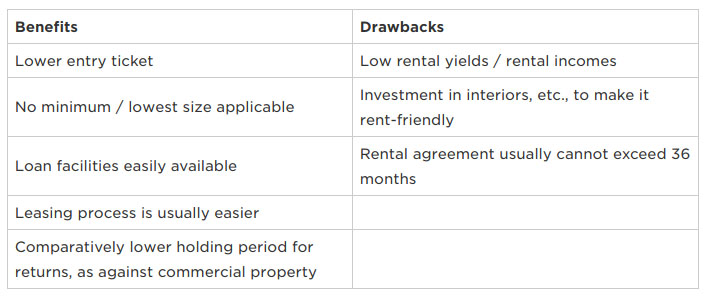
Benefits and drawbacks of investing in residential property


Property Investment In Thane

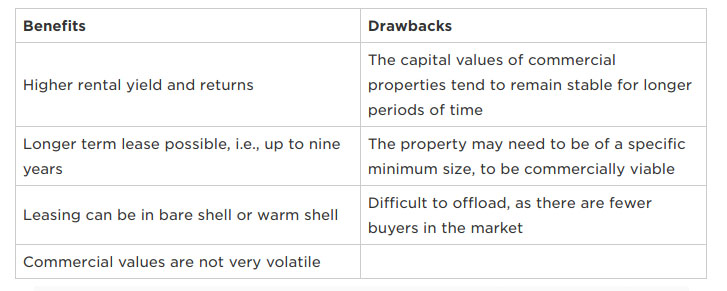
Benefits and drawbacks of investing in commercial property


Property Investment In Thane


TO KNOW MORE ABOUT PROPERTY INVESTMENT IN THANE VISIT CREDAI MCHI THANE UNIT


Source: housing.com

Monday, 18 February 2019

Co-borrowers: The fastest way to enhance loan eligibility


February 2019

Only a few people are eligible to become co-borrowers to a home loan and claim the tax benefits on such a loan, provided other conditions are also fulfilled 

With the prices of houses rising significantly faster than salaries, it has become increasingly difficult for individuals to buy a house on their own. Consequently, most people now opt for home loans. To enhance the loan eligibility, once can opt for a loan with the longest available tenure or, additionally, get someone to join you as a co-borrower.


1 / 2 BHK Property in Ghodbunder Road Thane
Credits : freepik.com

Persons who are generally accepted as co-borrowers


When it comes to adding a co-borrower to a home loan, lenders give first preference to the borrower’s spouse. It is presumed that the income of both individuals will be pooled for the purpose of household expenses, including for paying the home loan EMIs. The second category includes sons, daughters and parents. This is also considered as a relatively strong relationship, from a financial point of view. Please note that in case you add your parents as co-borrowers, their age shall be crucial in determining the overall eligibility.

The lender will only take the remaining years of their earning life into account, while computing the overall eligibility. So, in case your parents have already retired, including them as co-borrowers will not help you, as they do not have any income to help you service the home loan. 

Few lenders will be willing to let a daughter join as a co-borrower because the dynamics change once the daughter gets married and her ability to help you in servicing the home loan does not remain certain. 

Lenders have to take this reality into account. In case a son or daughter joins you as a co-borrower, the lender would insist on them being the first owner of the property, to ensure that the loan is serviced properly.

Persons who are generally not accepted as co-borrowers


Brothers and sisters of an applicant are generally not accepted, as co-borrowers for a joint home loan. However, if the brother/sister is able to convince the lender that the incomes of the siblings are pooled together, then, the application may be considered. This may be possible, if the brothers/sisters are staying together and are past their general marriageable age. However, the decision is made by lenders on a case-to-case basis.

People who are not eligible to be joint borrowers for a home loan


Banks generally do not approve of friends, partners or unmarried couples living together and other relatives, to join as co-applicants to a home loan. Lenders avoid granting home loans in such cases because these relationships are not considered to be strong. However, lenders may grant business loans to people who are partners in a business.

Tax benefits for joint borrowers


A co-borrower’s eligibility to claim tax benefits is not automatic. A co-borrower may not necessarily be a co-owner of the property. All the joint borrowers can claim the tax benefits, only if they are also co-owners of the property and are actually servicing the home loan. The ratio in which you can claim the tax benefits for the home loan, shall be according to the ratio in which you are servicing the home loan. This may be different from the ratio in which you own the house property, as each co-owner may not service the home loan.


TO KNOW MORE ABOUT 1 / 2 BHK PROPERTY IN GHODBUNDER ROAD THANE VISITCREDAI MCHI THANE UNIT


Source: housing.com

Wednesday, 6 February 2019

Vastu Shastra tips for the main door/entrance


February 2019

Besides being aesthetically appealing, the main door/entrance of a house also has to be in the correct direction, as per Vastu Shastra, to attract positive energy into the house 

According to Vastu Shastra, the main door of a home is not only the entry point for the family but also for energy. “The main door is a transition zone, through which we enter the house, from the outer world. It is a place from where happiness and good luck enters the home,” says Mumbai-based Vastu consultant, Nitien Parmar. “Consequently, the main entrance has been accorded prime importance, as it lets in or keeps out the cosmic energy flow that promotes health, wealth and harmony. Moreover, the main door also creates the first impression of a house,” he points out.

Under construction Properties in Thane
Credits : freepik.com

Direction of the main door

“The main door should always be in the north, north-east, east, or west, as they are considered auspicious. Avoid having the main door in the south, south-west, north-west (north side), or south-east (east side) directions. A door in the south or south-west, can be corrected by using a lead metal pyramid and lead helix. A door in the north-west can be corrected, with a brass pyramid and a brass helix, while a door in the south-east direction can be corrected, by using a copper helix,” suggests Parmar.

The main door should be bigger than any other door in the house and should open in a clockwise manner. Avoid having three doors in a line, parallel to the main door, as this is considered as a serious Vastu defect and can affect the happiness in the home.

Materials used for the main door:

Try and create an appealing harmony of colours, or a soothing interplay of contrast, for the walls and furnishings. Shades of green, purple, baby pink, etc., have a calming effect and these colours add style to one’s bedroom. The only private space in the house, other than the bathroom, is the bedroom. “The size of the bed should always be as large as the space will allow. Ideally, opt for a king-size or queen-size bed, with a comfortable, good quality mattress and throw cushions. Bedside tables on either side of the bed, with ample space for a lamp and keeping laptops, books, etc., is a must. This will create an inviting atmosphere, where one can unwind alone, while still enjoying your partner’s company,” adds Gupta.
  • A wooden door is considered most auspicious for the main entrance.
  • South direction: the door should have a combination of wood and metal.
  • West: should have metal work.
  • Northern door: should have more of silver colour.
  • East: should be made of wood and adorned with limited metal accessories.

Decorating the area around the main door


A clean house, especially the main entrance, attracts positive energy. Do not keep dustbins, broken chairs or stools, near the main door, cautions Kajaal Rohira, a holistic healer from Mumbai. “The area surrounding the main door, should have adequate light. Never place a mirror opposite to main entrance, which reflects the main door, as it will cause the energy to bounce back,” says Rohira. Tanya Sinha, a homemaker from Delhi, rejected almost a dozen flats, as the main entrance of the house was not according to Vastu Shastra, before buying a home with an entrance in the east. “The main door of my house has been artistically designed, with a matte gold finish. It has a carved swastika design and a gold-coloured name plate on it. The main entrance exudes a warm welcome and I have also placed a lovely yellow lamp at the entrance,” she explains. The main door should always have a threshold, (marble or wood), as it is believed that it absorbs negative vibes and allows only positive energy to pass through. Decorate the main door with divine symbols like, Om, swastika, cross, etc., and put rangolis on the floor, as they are considered auspicious and invite good fortune.

Vastu dos and don’ts for the main door

  • Always have a bright light at the entrance but avoid red lights. The main door should be well-lit in the evening.
  • Never place a mirror opposite the main door.
  • Decorate the entrance with green plants, if there is space.
  • The main door should open at 90 degrees, without any obstacles in the way.
  • Ensure that the hinges are oiled regularly and door accessories are polished. There should not be any broken or chipped wood, or missing screws at the entrance. Extra nails must be removed.
  • Always put up a name plate. A metal name plate is recommended, if the door is in the north or west direction. Use a wooden name plate, if the door is in the south or east direction.

TO KNOW MORE ABOUT UNDER CONSTRUCTION PROPERTIES IN THANE VISIT CREDAI MCHI THANE UNIT

Source: housing.com

Wednesday, 30 January 2019

Tips for renovating a bachelor’s house into a couple’s home


January 2019


A home for a couple is distinctly different from a home where a bachelor resides. We look at some of the basic design principles that couples must keep in mind, when designing or renovating their homes A bachelor’s home is generally designed for the comfort of one person. From the artwork to seating, everything is likely to be based on an individual’s choice. However, after marriage, this space will need to be modified, to cater to the requirements of both people and reflect the couple’s taste. While doing up the home together, it is important that the couple explore common interest in décor themes, to create a happy space.
“In any space belonging to a couple, there are distinct personalities that will want to make the house into a home. A woman’s outlook will vary from a man’s and merging the different views will always be a challenge for any couple. For example, a man may place a wooden bowl at the entrance of the house, to toss his keys and wallet. He may also place his shoes at the entryway itself. A woman, on the other hand, may prefer to replace the wooden bowl with a glass bowl with potpourri and hang the keys on a hanger and place the wallet in a drawer. She may move the shoes into a rack, while the expensive shoes may be tucked into a wardrobe. While both these scenarios work, they both have a different aesthetic outcome,” explains Lekha Gupta, senior architect, LAB (Language Architecture Body).

1 BHK / Studio Flats in Thane
Credits : freepik.com
Basic considerations for home renovation

A home for a couple means creating space to accommodating two people and their varying tastes. Hence, a couple must keep a budget in mind, before starting any renovation. “One of the basic things to consider, is whether the house has enough space. An apartment must offer enough privacy, in terms of partitions and door/window treatments. The wardrobe should have enough space, to hold the clothes and belongings of two people. With proper planning, one can create an aesthetically appealing and de-cluttered and organised space that also offers maximum storage. To enjoy watching television or an intimate conversation together, get a loveseat,” suggests Abraham Santosh, head designer, Elegancia.
Renovating a couple’s bedroom

Try and create an appealing harmony of colours, or a soothing interplay of contrast, for the walls and furnishings. Shades of green, purple, baby pink, etc., have a calming effect and these colours add style to one’s bedroom. The only private space in the house, other than the bathroom, is the bedroom. “The size of the bed should always be as large as the space will allow. Ideally, opt for a king-size or queen-size bed, with a comfortable, good quality mattress and throw cushions. Bedside tables on either side of the bed, with ample space for a lamp and keeping laptops, books, etc., is a must. This will create an inviting atmosphere, where one can unwind alone, while still enjoying your partner’s company,” adds Gupta.
Family dining room

With a lot of housing supply available in the new growth corridors, buyers are spoilt for choice. The cost of a flat is obviously important but one still only gets what one pays for. Ultimately, a home is not just an asset but one which performs the very critical functions of offering refuge, comfort and security. Buyers must look for options, which offer them these three advantages to a satisfactory level. Branded builders provide these as part of their standard value offering, because their reputation demands it.A display of shared memories, like photographs, can also strengthen a new relationship. Sticking small notes on the refrigerator or on window panes, can also brighten up a room, suggests Gupta. A modern kitchen, with modular fittings, the latest gadgets and ample storage, can also encourage couples to cook together. One can make the kitchen visually appealing, by selecting pleasant colours for the wall, fixtures and fittings. A stylish dining table will allow the couple to enjoy dinners together. “Well-lit kitchens and bathrooms are always functional. The dining areas can have task lighting and the living and bedrooms can have a combination of ambient and accent lights,” says Santosh.

While designing the house, the couple should discuss their plans, learn to compromise a bit and let function guide the design process. The ultimate aim is to ensure that the home is comfortable, calming and cheerful and helps you to relax and enjoy being together.
Home decor dos and don’ts, for couples
  • Consider each other’s interest and needs, when designing the home.
  • Opt for sleek functional furniture and do not crowd the space. Ensure that you have storage solutions, so that you can conceal the clutter.
  • Use corner areas in the house wisely. For example, you can convert a corner into a dressing table area with a mirror and storage space for cosmetics or opt for a corner desk, to turn the area into a workstation.
  • When designing the wardrobe, designate space for every item and have multiple drawers to use space efficiently.
  • You can create a cosy seating space on a day bed, by adding some cushions. Play with prints and use soft furnishings in vibrant colours, to spruce up the home.
  • A few candles and fresh floral arrangements, can instantly convert the look of a house from one owned by a bachelor, to a couple’s abode. Similarly, one can perk up the bathroom with aromatic dispensers, fluffy bath linen and glass jars for the toiletries.

Also read: How To Get A Home Loan To Construct Your Own House


Source: housing.com

Tuesday, 8 January 2019

Investment Tips: How To Buy A Home That Delivers Long-term ROI


January 2019

The decision to buy a property, should be based purely on the needs of the individual and the inherent value of the unit. We look at how home buyers can ascertain this, to choose a property that provides good returns on investment

With the Real Estate (Regulation and Development) Act (RERA) coming into force, as well as various other policy initiatives such as the Benami Transactions Act and the government’s push to affordable housing, we are seeing increased activity in the residential property market in the larger cities. After the dampener of demonetisation in 2016, the positive buyer sentiment visible now is especially significant. Consequently, builders are determined to capitalise on it, via increased marketing efforts. Given that there is already a lot of supply in the residential market – a lot of it for ready possession – fresh launches have been curtailed, so that the existing inventory can be absorbed. Much of the intensified marketing efforts are centered around special deals and offers.
Property Investment In Thane
Credits : freepik.com

How to ascertain the real value of a home


While this may be advantageous for property buyers, they should be judicious while evaluating offers and schemes and base their purchase decisions solely on the real value of the home. Freebies such as gold, cars and household goods, have an undeniable attraction but they are fundamentally frivolous in nature and do not add to the value of the home.

The price of a home is obviously an important consideration for middle-class property buyers. However, the strategy of looking for the cheapest options on the market, does not make much sense because it is quality that determines value. In the case of residential property, the quality of an offering depends on three aspects:
  • The quality of the location.
  • The brand value of the builder.
  • The availability and quality of facilities and amenities in the project and in individual units.

The importance of location in a property’s value


Central locations are traditionally the costliest, as they offer great access to many important parts of the city , such as the CBD (central business district) and SBD (secondary business district). These areas tend to host the offices of high-profile companies and offer a vast cross-section of jobs, from highly-paid management to more modestly-paid support staff jobs. Even the second category of jobs is attractive, because the growth prospects in high-profile companies, are usually very good. This is what makes living in central locations very desirable and from a real estate pricing perspective, very expensive.

In India, this mantra held true for a very long time, until the advent of the infotech culture. The IT/ITeS industry, tends to offer very good salary packages but is not focused on high-value locations. Quite to the contrary, such firms prefer to set up shop in peripheral locations, so as to save on the real estate costs. As a result, many cities’ outskirts have become very desirable places for home buyers and they are far less expensive.

For IT professionals and industrial employees, as well as property investors, buying a home in a peripheral location that connects to an IT hub and/or manufacturing belt, makes perfect sense. Unfortunately, such locations attract all kinds of developers – from those who have a reputation for creating true lifestyle value offerings, to those who specialise in constricted, ‘pigeon-hole’ homes. This is where the brand value of a developer plays a significant role.

Correlation between brand value and quality


With a lot of housing supply available in the new growth corridors, buyers are spoilt for choice. The cost of a flat is obviously important but one still only gets what one pays for. Ultimately, a home is not just an asset but one which performs the very critical functions of offering refuge, comfort and security. Buyers must look for options, which offer them these three advantages to a satisfactory level. Branded builders provide these as part of their standard value offering, because their reputation demands it.

Facilities and amenities that add value to a property


Urban life today, places a lot of stress and demands on us. Consequently, our homes cannot be mere places of refuge but must also provide healing and rejuvenation. A clubhouse, swimming pool and children’s park, are no longer luxuries but the bare minimum that Indian home buyers can and should expect. Nevertheless, even projects without such offerings will find buyers because of their lower prices. While short-listing prospects for home purchase, it is important to ensure that the final selection provides a decent lifestyle and not just an abode.

If one looks at the supply in the residential property market from this perspective, the choice of options automatically narrows down to a more manageable and comprehensive level. Buying the right home is not just about present and future comfort, but also about investment growth. Homes in good locations, built by reputed developers with a good saturation of amenities and facilities, will always yield better capital appreciation, as well as potential rental income for property investors.


TO KNOW MORE ABOUT PROPERTY INVESTMENT IN THANE VISIT CREDAI MCHI THANE UNIT

Source: housing.com